Retail Relates
Welcome to Retail Relates — where commerce gets personal.
Each episode brings you inside the world of global commerce — across retail, consumer services, hospitality, and brand marketing — through powerful human stories and the ever-evolving forces shaping what we buy, why we buy, and how we connect.
From entrepreneurs and icons to industry veterans and rising changemakers, we spotlight those redefining how people lead, create, and connect in a fast-moving world.
Hosted by our roundtable of industry experts, we offer a 360° view of the marketplace through honest conversations, lived experience, and practical insights that resonate.
Let’s get started — this is where the story of modern commerce comes to life.
Retail Relates
Finding Clarity in Complexity: Celeste Risimini-Johnson on Leading Retail at Scale
Use Left/Right to seek, Home/End to jump to start or end. Hold shift to jump forward or backward.
Retail leadership at scale is not about volume.
It’s about alignment.
Celeste Risimini-Johnson operates at the center of one of the most complex intersections in commerce — merchandising, operations, omni-channel execution, and brand strategy — all inside an environment that serves the next generation of consumers.
As Chief Merchandise & Operations Officer at Barnes & Noble College, Celeste leads the General Merchandise business inclusive of omni-channel merchandising, planning & allocation, and merchandise information teams. She also oversees store operations, design & construction, and brand partnerships — a scope that requires both creative instinct and operational precision.
In this episode of Retail Relates, we explore what it really means to balance creativity with P&L discipline, and how leaders translate vision into execution across cross-functional teams.
About Celeste
Celeste Risimini-Johnson is the Chief Merchandise & Operations Officer for Barnes & Noble College.
She leads the company’s General Merchandise business across omni-channel merchandising, planning & allocation, and merchandise information. Her leadership also spans store operations, design & construction, and brand partnerships — connecting brand, space, and product into a cohesive experience.
Prior to Barnes & Noble College, Celeste held senior leadership roles at Lands’ End, Toys “R” Us, The Children’s Place, and Fullbeauty Brands. During her tenure at Lands’ End, she was awarded two Lighthouse Awards for Outstanding Leadership and Results.
She is a member of the Women in Retail Leadership Circle and holds a bachelor’s degree in Marketing and Fashion Merchandising from Johnson & Wales University.
Her career reflects more than upward mobility — it reflects range. General management. P&L ownership. Merchandising strategy. Product development. Business development. Turnarounds. Launches. Expansions.
She is a merchant who understands that brand promise only works when it connects to the consumer — and when the numbers work.
Setting The Stage
BenSome leaders grow inside a single lane. Others build careers by stepping into complexity and learning how to orchestrate it. In this episode of Retail Relates, our co-hosts Rich Honiball and Judy Sejini sit down with Celeste Risimini -Johnson, the Chief Merchandise and Operations Officer at Barnes & Noble College. She leads the company's general merchandise business across omnichannel merchandising, planning and allocation, and merchandise information. Her leadership also spans store operations, design and construction, and brand partnerships, connecting brand, space, and product into a cohesive experience. Prior to Barnes and Noble College, Celeste held senior leadership roles at Land's End, Toys Are Us, The Children's Place, and Full Beauty Brands. During her tenure at Land's End, she was awarded two Lighthouse Awards for outstanding leadership and results. She is a member of the Women in Retail Leadership Circle and holds a bachelor's degree in marketing and fashion merchandising from Johnson and Wales University. Her journey reflects something many retailers experience, but few articulate well. Growth requires both courage and clarity. You must confront difficult truths, recalibrate your leadership style, and align teams that don't always see the world the same way. In this episode, we explore what it really means to modernize without losing rigor, how leaders balance brand storytelling with PL accountability, and why retail's enduring advantage still lies in human judgment. Stay with us. This is a thoughtful conversation about scale, reinvention, and leading through complexity without losing focus.
Rich H.Welcome back to another episode of Retail Relates. It is a pleasure today to be joined by Judy Sejini. How are you today? Joining us after accepting a new position. Congratulations.
Judy S.Thank you so much. I'm doing great. How are you doing?
Rich H.I'm doing great. It's my pleasure to introduce uh Celeste Razimini Johnson. Celeste, tell me I got that right.
CelesteAll the way. Good to go.
Rich H.Outstanding. And when you talk about the power of relationships, you and I were introduced uh by Lisa Malani.
Speaker 4That's right.
Rich H.Who was a guest of Retail Relates several episodes ago? We've read your bio. You have a very rich retail history. You're doing something very cool now, but we really want to dig into your path in retail. And one of the things that we do is start with this question of everything you've done over your entire personal and professional life. What three pivotal moments stand out to you that have made a difference in your path, in your journey, and that have brought you to where you are today?
CelesteWell, it started back in high school when I worked as a retail associate in a small little department store in town. And someone handed me an open tobac and said, go to New York City and spend some money. And I thought, wow, this is the coolest job
Celeste’s Three Pivotal Moments
Celestein the whole world. How do you do this forever? And that's how it started. And prior to that, I wanted to be a pediatric nurse. So I caught the bug on spending someone else's open to buy and never look back. So that was uh pivot number one. Second is I had a mentor, the owner of the children's place, who was just an incredible person. And so he taught me how to treat people, how to respect the customer, all the things that the greatest merchants in the world do. Um and and every time there was something new to do in the business, he would come to me and say, Let's do this. You can do this. And and he would just give me freedom to do what I thought we needed to do. And that was pivotal for me because it helped me to grow. And I never felt constraint or guardrail. I always just felt like he trusted me. And so that was pivotal because I was able to learn and do things that I would not probably have done in in some other companies. And so to me, that sort of gave me the freedom to just expand and grow and and learn. Some mistakes along the way, of course, but certainly having a mentor like that was pivotal. And let's see, the third pivotal moment is when you have the opposite of that, right? The boss that you sit and say, hmm, I don't ever want to do that. And I want to take a turn to a different course of action. Um and so those experiences are so pivotal when you s just sit back and say, What's the learning here? You think it might be negative, but no, it's it's actually really beneficial to have a moment that's not perfect so that you can move forward.
Rich H.That's one of the toughest lessons to learn. And I've had a couple of those. Before I knew I wanted to be in retail, I was fortunate to have a mentor at one point that brought me on a buying trip. And the lesson I learned was when we were buying apparel, and afterwards they opened up a book with about 14 different brands on it and said, which brands do you want to buy? And I never realized that that happened. And then later in my career, really learning that you learn as much from bad situations or from tough leaders as you do from the good ones. But was this what you wanted to do in your career? Did you have different aspirations? When you were in high school, you went to college and said, What do you want to do? What was it you wanted to do?
CelesteYeah, I wanted to be a buyer. I purposely chose a college that was known for retail merchandising and marketing. The curriculum at Johnson ⁇ Wells University is sort of an upside-down curriculum. So you have to go in knowing what you want to do. You have to declare day one. And your core classes are what you do in your first two years, which is the opposite of most universities, right? Mostly, most universities you go in and you do gen eds and you do basic core things. This was the opposite. And they owned a retail store. So you had to do an internship right off the bat. Um, and so it was, I was very pointed in what I wanted to do to the point where I only applied to that university. And my mother had a heart attack because how could you just apply to one university? But I knew and I was hell-bent on going there. So that was that. Um, once I got that bug in high school, that was it. So just carried on. Now, what I don't do, and I think people, a lot of people today think they have to achieve the next goal. They have to write a plan for the next 10 years, they have to make sure that they're a vice president by 30 or whatever that goal is, right? That's never been my scenario. I've always sort of let the journey take me where it takes me. I can say that I don't regret not one choice that was was put in front of me. Um, I feel like, again, back to the good, the positive, and and the negative are all learnings, and that's how you grow. But I never had a plan to say I have to be this by then. I always just let it happen as it happened, and um, it was all good experience. Was the challenge or setback that taught you something lasting? It's a it's a deep one. When I was just really starting to take traction in, you know, a director, senior director, that sort of level of role. Um, I was very driven. And I was very driven for my own expectations, and I was very driven for everyone around me. So my expectations of people were probably a little rough, harsh, aggressive, right? I wanted we we had to win and we had to deliver on time and we had to have the right product. And so I was always pushing, pushing, pushing. And my CEO, the one that I said was the greatest in the world, just brought me in one day and sat me down and said, You're incredible at what you do, but not everybody can keep up. And not everyone can be at the same pace. And if you want them to be with you, you
Choosing Retail And Early Store Lessons
Celestehave to soften yourself, soften your approach, right? Because I was just go, go, go. And that I will never ever forget that day. I will never forget the location we were, and I will never forget how I walked out and said, okay, sister, adjust yourself and figure it out. And um, that took me, skyrocketed me on growth in terms of how I lead people, how I think about people, how I think about the whole team. And so that was a major challenge that turned into probably the best thing that ever happened to me.
Rich H.Were you able to make that pivot? I I want to dig into this one a little bit because I was not as successful with learning that lesson. And I've seen others in leadership positions and in merchant positions that they're very driven, they're very passionate, and they they work intensely, but they're not necessarily good developers of talent or managers because you you look at them and you say, I can't keep up with that. Were you able to make that pivot? Or was it just something that you had to continually work on?
CelesteOh, I I absolutely made the pivot, but I don't know that I made it, you know, that that moment, I had to really think about every interaction and every person. And then what I learned and took away from it, and how I think I really sort of mastered it is that each and every person has a different, needs a different approach. And so Judy might be able to keep up with me. So we're gonna, we're gonna go and we're gonna rock it quickly. Um, but Rich may need a softer, different approach. And so the way I lead people is very different with each individual. Um, and that was definitely a learned skill. It did not happen overnight, but happy to say my my team today would walk through a brick wall for me because um they know that I appreciate each and every one of them.
Rich H.So you've been at various retailers, you've served in various positions. How have you changed your leadership style? And I'll I'll add an underlying question to that. Part of it is how you've evolved over time and how those working for you have evolved, the generational changes that we talk so much about.
CelesteI think the one thing that I always grab onto is just be yourself. And so that's allowed me to evolve because obviously we all evolve in our own lives and our own personalities and the stages of life that we're in. And I think it's really important for people to see you as a real person. And so when I would have a bad day, I would absolutely let somebody know I'm having a bad day too. I get it, it's a struggle, right? We're it's midnight, we're working on something, we're all tired. Bring them along. And so evolving as a person, I think I took that along with me as a leader and evolved in the same way as a leader. Uh, you can call it authentic leadership, you can call it empathetic leadership. There's so many names out there, but at the end of the day, it's just being yourself and just showing people that you're a real person. When they feel like they can trust you, they come along with you and they work really hard for you, but they know I have their back. And I think that for me was the the key to moving in in that into that that leadership role in a positive way.
Rich H.So you mentioned that at an early age you wanted to be a buyer and you were kind of driven to that to the point where you worked without a net. So I I think if I was your mom, I probably would have said the same thing. Like, you got to have a backup plan. And and I I learned that the hard way. What made you decide that early on that you wanted to be a buyer? And what did you enjoy most or what surprised you the most when you finally became a buyer?
CelesteCertainly the the lights and the cameras and the action of fashion, right? So, you know, I live close to New York City, I would be in the city, all the fun stores and and the the I love color, I love art. There's there's all that passion behind it. I am extremely I I support the fact that I started in stores. And why I say that is because I I I initially coming out of college worked in the store in the field, right? So for Nordstrom, for structure, for the children's place as a store manager. And I felt like that was extremely beneficial to my job today in the sense that as I came up the ranks, I could understand what actually happens in the back room, what actually needs to take place on the floor, what actually happens when you decide you're gonna take a markdown. But I knew I did not want to be in the field. So as I was becoming the store manager and the
Hard Feedback That Changed Leadership
Celesteone that everyone called on to go fix a store, I very quickly said, okay, great. I love that I'm getting a good reputation as a store manager, but this is not where I want to wind up. I want to go into the buying portion of the business. And so because I built a reputation and because I built a work ethic and uh and people, you know, saw me and knew me corporately because I was fixing stores when it came time that a buyer position opened up, I raised my hand really quickly and got myself out there. And I think that's something for for this generation to really take away. If I could say, take away something from what I'm saying is be seen, be out there, make yourself known. And my reputation, I think, is the thing that has helped to catapult me each and every time I I move forward. What's something about your area of expertise that people think that's completely wrong? I think it is the lights camera action. I think people look at buyers and merchants and say, oh, they travel the world, they go on buying trips, they spend money, they they buy samples, they do all these things. And yes, we do. We actually used to do it a lot more, right? We used to do multiple buying trips a year to Europe, and it was so fabulous. But no one knows that when we were in Paris, we never stepped inside the Eiffel Tower, or we were schlepping 20 duffel bags onto the train at midnight to get to the next place. So, you know, it all looks so glamorous, but at the end of the day, it's business. There is the art, but there is the science. And so um that that balance is so necessary. Um, but when people look at you, they only see the art.
Rich H.So you've been in that tiny hotel room in where it's with a couple of other people where you've been processing samples and cutting samples and writing them up for customs and mm-hmm, yeah. Yeah, you should be having steak frites or something, and you're Hubbled and done and you've done that. So what's interesting is, and Judy can uh can attest to this. When I teach retail, I I do so at a school that doesn't offer a retail degree. It's part of the marketing program, and so it's taken as an elective. And I will poll the students to find out, you know, if they're working, if they've ever worked in retail. And I think it's over 60% have either worked in retail or they work in retail at that moment, but very few of them have any desire to go into retail. Your perspective that the glitz and the glamour and the fashion runways isn't what buying is necessarily about, unless you're in that cert echelon, and even then I could challenge it. How do you make retail exciting to this generation coming up? To those that may be in retail and are only seeing a small portion of it, yet there's so many more things that could be done.
CelesteI think it's about innovation and making sure that they see it, they live it and they breathe it. There is something to still visiting a mall and getting out there and seeing what's new. Retail is one of those things that has visual appeal. And so for me and for my team, we get really excited by doing comp shopping and getting out in stores and talking to customers. And so I think you have to live and breathe a little bit of retail to um to love it. And you'll quickly know if you don't love it, right? Because that's possible too. But getting out there and and being part of, you know, seeing who's doing it well. You always ask the question, who's doing it well? What's Nike got from an innovation standpoint? What is X doing this week? Who's what's happening at Aritzia? It's exciting to be in the thick of it and to see color and to see how to present things and to see lighting. Where's the innovation coming from to tie it into the future? I think is the thing that um this generation is always looking for. What's next? What's next? What's on TikTok? So I think tying it into the trend and the future of what's happening out there is the exciting piece of what we do.
Rich H.With as many retailers that you've worked with, is there a particular strategy that you led? A campaign, a strategy, a launch that to this day you look back and you go, damn, that was really good.
CelesteYes. There were many back in my kids' days, but I'm gonna talk about something a little relevant right now. Coming out of COVID, universities came to us and said, we asked, what's your biggest challenge is today? Our mission is to drive student success. So what does that look like? And so uh universities by far said our number one challenge right now is mental health, is engagement on campus, students, you know, really connecting. And so we sort of took a step back and said, okay, how can we, we're not the health department on campus, certainly, but how can we support students in that successful journey, not necessarily academic, but social. And so we sort of said, we don't want to just put products on shelves. We want to really get to
Adapting Style Across People And Generations
Celestethe core of how do we help students mentally. And so we partnered with um, instead of just sort of going out and buying from a vendor and putting, you know, oils on a shelf or something that's already sort of out there, we partnered with a company called Lifelines, who is founded by the toy makers Melissa and Doug. And so Melissa is on a journey to also drive mental health success with adults and teens. And in the same way that she sort of approached toys for children, right? So it's, you know, tactile, it's it's fun, it's playful, it's keeping your hands busy, it's keeping your mind busy. And so she partnered with Harvard Science. She did all this research and and uh we partnered with her, but from day one, I said to Melissa, we don't want to just put products on shelves. And she is all about helping students. So um we came up with campaigns and speaking engagements for her. She went through her own mental health challenges, she went through a lot of things that people don't realize. And so it's part of her what she wants to do for others is to really share that journey and share what her successes were. And so we brought her on multiple campuses. She sat with students, she walked them through her journey and the things that helped her. And um, so we and then we partnered with support systems on campus and the departments to make sure that they knew that we had products to help students. So we really tapped into how can we help students get through this journey in more than just selling them products. And so for us, it it just felt like we hit all cylinders, right? I always sort of have this playbook of when we approach certain initiatives. And I think it starts with a mission. So for us, starting helping students through mental health was a major mission for us. And when you have a mission on an initiative, it helps drive success because people feel so passionate about it and people feel like there's a purpose. And so we start with that purpose, and that mission was important. Then we move to connection and we felt like this was really something that connected with people. We um were able to speak to them one-on-one. We had students emailing Melissa for months after her speaking engagements, you know, asking for help, asking for one-on-one. You know, she certainly doesn't tout herself as a therapist, but people see her that way because she's so calming and so just so special. And so connecting on that level was incredible. And then the third thing in that playbook for me is always about innovation. And so when we first launched, we had things that worked and things that didn't work. And um, and so we quickly pivoted and um took the lessons and and made it better and bought more of the thing that students were looking for and less of the other. So to me, there's this playbook about mission, connection, and innovation that all tie together. Um, and I find that when we approach an initiative with those three things, it winds up being a success. So we were super excited to help students in a bigger way.
Rich H.Well, I appreciate the way that you wrote that story together because halfway through, and I was practicing my active listening skills and not just jumping in and interrupting you, which is a lifelong journey. I was going to ask what was the ROI of the relationship with Melissa and Doug? And I was going to do it somewhat tongue in cheek because we've all been places where you have those initiatives and they're powerful, they're authentic, but they don't produce that immediate ROI, and oftentimes they're not really. Recognized by the consumer, but I love the way that you've tied it together into the innovation and the mission and how all of them become interconnected.
CelesteYes. And quite frankly, it was a launch for Melissa and Doug as well. So they had learnings the with the launch, right? They had products that they had created that really didn't take off and they quickly pivoted and moved to other products and came up and um created other things that were working. So for all of us, it was a learning to get the ROI and to make sure that yes, it at the end of the day, it it has to generate profit. But the most important thing was it started with the mission and we were helping students.
Judy S.I just wanted to say that I'm so grateful that you focused on mental health because as somebody that entered college right as COVID started, it was a tough time. It really was. Campus was empty, it was hard connecting with other people. So programs like those was really appreciated. What would you think the future behavior of consumers would be?
CelesteYou know, I it's so interesting because we're in a world where AI is
The Real Work Behind Buying
Celestetaking over and every person can't stop talking about AI and technology. And so I think there will be obviously a piece of that that happens, but I'm so hopeful, and maybe it's just my hope, that we also see things moving personal. I also see things moving local. We are selling even today small sizes of things. We were in a trend in the world where everything was a supersize and a big size and a double size. And now I see people buying things that are small, mini books, mini notebooks, mini, you know, things that they can just tuck away in their bag. I think people are overwhelmed with the amount of things that they have and things that they do. And so they're reaching for this sort of small personal local behavior. And uh I'm I'm super encouraged by that, even in the world of technology and uh and AI. And I think it will be interesting to see. And that might be, you know, a niche of people, but um, at the end of the day, I'll be excited if it comes back to personal connection and small buying.
Rich H.Well, you mentioned AI. I had to look it up to see what that meant. I you know, I made that joke a couple of times and I don't know that it landed, but you mentioned AI, so let's go there. How do you think AI is changing the nature of both the business side of retail and the customer side of retail? And what are we getting right? What are we getting wrong? Let's have fun with this.
CelesteYeah, yeah. I think uh, first of all, for me, I always think about when you talk about data, it's garbage in, garbage out. So you better make sure that wherever you're putting into AI or whatever you expect to come out, you make sure it's correct and it's scrubbed and it's clean, right? Um but there's some really great benefits to it. I see my teams using it all the time just in terms of quick, fast answers. Um quick, fast creation of PowerPoint slides or presentations or you know, things that could have taken double the time are taking half the time. So from a time sensitivity, I think it's incredible. I think the scrubbing of sites and competition and pricing and all of that is so much faster now with AI. And we're, you know, starting to use that type of service as well just to this faster than a person, but it doesn't replace a person, right? The person still has to make the decisions, the person still has to assess if that's the right answer or which way to go. So I think it's a tool, it's not a replacement. Um, I did have uh part of part of my team at the CES technology show, and there was just robots everywhere. So robot for a massage, a robot to do your job, a robot to clean your house, a robot to make you coffee. So that will be the extreme. Hopefully, we're not there yet.
Rich H.I don't think anybody wants to predict where we'll be 50 years out, because I don't think if you went 50 years ago, you would predict exactly where we would be today. I find the conversation around AI intriguing, and it can honestly take several different paths. And I guess I'll follow up to what extent obviously companies and organizations are looking for efficiencies. They need to recapture margin, costs are challenged. I get that. But to what extent do you think responsibility is on the end user, whether it's the customer or the associate, not to default to, for lack of a better explanation, a lazy setting, just having AI shop for you, or just if you're the associate, even with a student, having students just say, Well, I'm gonna have AI write that paper that uh that Honeyball assigned, and here's the prompt, and here's the three pages I need, just let it go. What responsibility do you think we have as individuals?
CelesteWe own it, right? We own the decisions that we make. When AI first started bubbling up, it was a big conversation in in my house because I had uh one in high school and and one child in in college, and I was panicked, right? Oh my gosh, don't use it. You'll be expelled from school. You know, there were all these uh worries. But we own deciding how we use it. And even as leaders of the business, I think we own guardrails around what our teams should or shouldn't do uh so that we get the right benefit out of it and it's not replacing or doing the work for us, it's just a tool.
Rich H.So let me lean in on that. If you are coaching leaders,
Inspiring The Next Generation
Rich H.how are you telling us how to treat AI, what to do, how to get our teams ready?
CelesteI think I'm coaching leaders to again use it as an efficiency, but not use it to do your job. And so showing examples and coaching people through and embracing it in ways that it can really help us, I think is important. But also when I see it show up, and I have seen it show up in ways where I said, hmm, did today I do this for you because do you agree with it or not? I need some context here. And you know, it's like, oh yeah, I did put it through AI. And sometimes it's obvious when the work is not you. And so I think calling that out and making sure that we sort of lead them in the right direction versus just using it as a crutch.
Rich H.It's interesting. I was an early adopter from the perspective of obviously not 1956, but when ChatGPT made it dumb enough that I could understand, I was all in. So I've I've been using uh AI in in that way for three years. And you get past the fun that it can create. You know, I love taking memos and saying, hey, am I being too harsh, or can you put in two quotes from Scarface and you know that are more obscure? So there's some fun with it, but it was intriguing a couple of years ago when someone I knew from a previous career stop was working with a CPG company and they banned AI for a while. And the reason being, someone had generated a memo and had sent it out and it was less than appropriate. And it was almost as though they abdicated the responsibility. I know, you know, the person I work for, if I'm drafting something for them or if I'm giving them information, I'm getting it back with a red pen. I'm getting it back checked because that person takes ownership in what they do. I try to do the same thing. How much of it is in our hands?
CelesteIt is. And I think you you hit on something that I would double-click on is I use it in the same way that you just mentioned, where sometimes I'll write something and I'm very sort of uh direct. And so sometimes I'll say, Hey, can you soften this up a little? Or can you add a little pizzazz or change the tone a little bit? But it's my information and I'm writing it. I'm just asking it to give it a little nuance, right? And and that's okay. That's filling in where I feel I may have a little bit of a gap, but it's not writing it for me.
Judy S.Exactly. I feel the same way with AI. I just want to ask it for help but not use it to do my work.
Mission, Connection, Innovation Playbook
CelesteBut if you could ask a student one question, what would it be? I think I have two things. One is for them and one is for me. So for me, I would want to know if we could create a retail environment, a store, a new experience, what exactly would that look like? What is I think we we, you know, we've gone through the phases of needing seating so everyone can gather in the old Starbucks way. And then we've gone through the experience of it needs to have a basketball court or an experience. Um, and so I would want to know now where are we? What's the next hot thing? What what should we create for this generation to be excited to come and visit a store? Because I think visiting a store is so much more exciting than shopping online. So that that's one thing. But for them, I would say at every step of your or every stage of your life, I would ask you to ask yourself, what are your top three priorities in the role you're in? And I think that's important to think about because it changes. When you're first starting out and you're first coming out of college, you know, you may have one priority, which is a just get a job. B, you know, your next two years is how much money am I making? But there's different stages that you go through in your life and and you gain experiences and and desires. And and so when you're at that stage, are you getting out of it what you need? Are you getting, is it giving you what you want? I mean, we spend a lot of time at work with and with people at work. Um, and so what's your priority, right? When you hit, for me, when I hit 50, it was like, okay, I've sold a lot of sweaters. I can't just keep selling things anymore. It needs more purpose. And that's when I pivoted to Barnes and Noble College. And student success became my priority. And I jumped right in and it made me feel like I was contributing more to the world. And so I think that at different stages, you want different things, and it's important that you sort of assess that as you go.
Rich H.I blame this generation. I do. And I'm being very serious when I say that, Judy. I'm not just singling you out. I had that same sort of reaction about 10 years ago, which brought me to where I am now, serving a military patron. And I just I loved everything I've done. I've enjoyed every job, um, have been, I think, successful in many ways. But I studied the younger generations and that sense of purpose and mission. And I'm one that doesn't like to have generational stereotypes because, you know, in our generation, there were those that were doers and those that were laggards, and so you can't stereotype. But I studied this generation and what they were looking for, and less about having more goods and keeping up with the neighbors, and more about purpose and passion that I think I got impacted by it to the point where I said, you know, I want to do something that brings me a reward at the end of the day. So I'm gonna get you on record so that we can come back to this five, 10 years from now. You're looking five, 10 years in the future. What do you think retail is gonna look like? Make three bold predictions that you think you don't have to be bold, but I mean, you can say it's gonna look just like it does today. But what are where do you think we're gonna be five, 10 years from now?
CelesteI do think we are going to be more local. I do think people are starting to resist the you know big retailer, the big everything. I I think we're gonna have a little bit of a burst of a bubble, and people are going to support localization and support uh their neighbors and and support making sure that the world is a better place. And maybe it is your generation's fault, Judy. I don't know. I or maybe it's just a hope. But I I do think that we're gonna get there.
Rich H.I have a theory. I think we're far enough removed from that consumption period post-World War II and the 1960s madmen and the need to keep up with the Joneses that I think generationally and globally, people are making different decisions. And we still have fast fashion and we still have splurges and we still have luxury brands, but I do see a sense of do I really need that now? Do I really want to be weighed down by it? And I guess I'll ask one more follow-up. So you have an advantage right now in leading merchandising efforts at Barnes and Noble College. So anything else that you're seeing from this generation that you think is going to continue to impact the broader retail industry and commerce in general?
CelesteI think it's almost as big as the AI conversation, but the NIL conversation is going to change how things happen. Um, it's certainly spicing up the sports world, but name, image, and likeness is going to just change who gets paid and how people get paid. And um I don't know if it's for the good. I'll keep my comments to myself about whether it's a good thing or not. That's definitely a debate uh all over the place, in even in my household. Um, but I do think those kinds of things, whether it be NIL or some other kinds of deals, you know, people, celebrities, things like that, uh, will impact retail in general.
Rich H.Interesting. Yeah, you can see that heading down a path where it's really good, and you can see it heading down a path where it's really not. And so it is a it is a little bit of a coin toss. Same question we have with AI, same question we have with social media. So it really is kind of what
ROI With Purpose And Student Impact
Rich H.we are looking for. All right, Judy, jump in.
Judy S.What is an underrated skill or trait that you look in for people?
CelesteSense of urgency, work ethic. Um, I do believe that those who get to the top have this sense of urgency to just get things done. Um, I was joking with Rich before. Does he ever sleep? Because he's always doing something, but he, you know, five hours, I guess, is enough for him, but it's reacting, right? When someone says, do this, you have you do it, you move. Yeah. It's passion, it's it it speaks to passion and energy for me. And so I think that that is a treat that definitely um I would rather hire someone with a sense of urgency, work ethic, passion than someone who has experience in the role for many years, but does not show that.
Rich H.Do you think experience becomes an albatross at times? And I'm asking that, and those who are listening to it and not seeing it, I'm smiling, and I'm not trying to bias the answer. But do you think sometimes experience gets in the way today?
CelesteIt can. And then there's other times where it's really important. I think it depends on the role. It really does. Because some people also are fantastic at their job, but they may be in the wrong role, and then that's not a good mix either. So the the the idea of the per the right person and the right role and the combination of the two is super important. So experience is good at times and sometimes gets in the way. When you need to move and innovate and and shake and drive quickly, sometimes it does. All right.
Judy S.So I know you just said that you look for a sense of urgency in people, but what is something that students and emerging leaders can do to set themselves apart in today's environment? Great communication.
CelesteI think your generation a little bit are, you know, and it is the usage of the phone. I hate to point to it, but it's pick your head up, get out of the phone, communicate with words, tell me what you're thinking, have energy behind it. And when you communicate with energy and passion, people think that you want it more than the person who's sitting there, you know, in the corner just hanging out. So to me, that that passion and energy and communication is so important. Shake hands, do the things that you know you saw your grandparents do that maybe you're not seeing your friends do when you walk in the room. It's just a present.
Judy S.No, I definitely agree with that. And my dad the other day told me that since I started a new job, I should go to the buildings next door and introduce myself. And I thought it was kind of weird, but it kind of follows what you just said. So I'll go ahead and do that. Yes. What made the biggest difference in your career?
CelesteMy mentors and my reputation. Um, I think because I always showed passion and energy and worked hard and and and showed
Consumer Future: Personal And Local
Celestethat I wanted it and that I loved the customer, I always sort of said, you know, try to do the right thing. I that that built a reputation for me of, you know, when you need something, go to Celeste. She's gonna make it happen for you. Or when you need some support, she's gonna jump right in, she's gonna go the extra mile. That goes a long way. And I think as I advanced in my career, it just became even bigger in a bigger way, right? If you need to fix a business, the recruiter would call Celeste, right? So that you get this reputation in the business, people know you, talk about you. The one thing I would say to every student listening is people watch and people talk. And so you build a reputation, people see what you do or don't do, and then people talk about it. And uh, when it's time for a job opening, and they say, call Celeste or don't call Celeste based on your reputation. So um, it matters what you do and how you're seen.
Rich H.I want to double-click on that. In the beginning of our conversation, you had mentioned that you can have this, you know, this talented, hyper aggressive workhorse, and and those are my words, not yours, that just isn't a fit on the team because other people can't keep up with it. And you put yourself in those shoes and said that when you were perceived that way, you had a mentor that came in and said, you can't lead that way. So bring that to the suggestion now. And is there a danger that students or emerging leaders are going to look at someone who networks naturally, who's an extrovert, who's comfortable? And how do we, in our positions, work with those that aren't as comfortable with that to be more comfortable with networking, introducing themselves and building those relationships, which quite frankly are the way that most people will get jobs going forward, in my opinion.
CelesteIt's interesting. Networking is a an interesting thing in general, right? Because it comes natural to some and not to others. And I'll be honest, it is not my forte. And I don't love to walk into a room of 400 people and start working the room. I am not the room worker. However,
AI As Tool, Not Replacement
CelesteI connect really well with people one-on-one or in a small format. So I think it's important that you pick and choose which formats you are comfortable in so that you can be your best self in that environment and be and look comfortable and feel comfortable and and connect with people. Not everyone needs to be all over social media or, you know, I always said early in my career, it's it's hard for me to toot my own horn when it comes to even things that I'm doing as a business leader. Self-promotion is not something that I uh do. I just it just never came easy. And others could do it in their sleep, right? But be yourself. Um, and when you do decide to network, network in a way that is comfortable for you and gives you your your best representation of yourself so that um so it comes across authentic because you never want to be the person worked in the room, but you looking really out of place and and uncomfortable, that's even worse, right? So that's how I approach it. I pick and choose where I think I'll I'll fit in and feel good.
Rich H.And I love that. And I just marked it because one of the things I enjoy is when I go back and listen to this and and I'm editing it. If I'm the one editing this episode, pull certain things out and I use them for myself. So really, this is just one big conversation for me to continue to try and improve. But be your best self. It's almost like you could have that stamped, whether you're starting off in your career, whether you're a leader, whether you're a brand, whether you're a retailer. And I think so many of us try to emulate somebody else, whether we're as a brand or as a business or as an individual, that we lose sight of who we are and what we can be best at.
CelesteI love that.
Rich H.So I will ask the mentor question. So, given that, you've had, I'm going to assume, mentoring relationships where somebody has tapped you on the shoulder. Shoulder and said, Celeste, you know, I think you're very strong. I'd like to work with you. And I'm making the assumption that you've had other situations where you've looked to someone and said, I think you could be helpful. I'd like to learn from you. How do you go about choosing mentors? And how do you go about investing in them the way you want them to invest in you?
CelesteI think you choose based on right, it goes back to what I talked about reputation. You choose people who have a great reputation and you choose people who you want to emulate and be as successful as them. And I don't mean successful in their paycheck. I mean successful in how they lead, how they do their job, uh, how they connect with the larger organization. I remember a new boss coming into the children's place at one time. And within, you know, her first hello to us, I thought, uh, I need to pay attention to her because she just grabbed the room in five minutes and everybody's all in on her being our boss. And I watched her and she walked the halls every morning and she said hello to every person. And she did all the things that made people want to stand behind her and do the best they could every day for her. And you make time with them and you watch them and you pay attention and you ask questions and you um and I remember touch bases with her were pointedly information that she wanted, but then time for me to ask her what I wanted and to give her feedback, not only questions, but feedback. And so it was very much an interactive relationship where I she made you feel like you weren't only learning from her, but she was also learning from you. And I think that's important in a mentor that you're both getting something out of it. I've been the mentor in a few programs, and um I absolutely got as much out of it as the person who I was coaching at the time.
Rich H.All right. So we are ready for the rapid fire round, and I'm gonna go lost script. We hit AI, so I'm going to give you the AI magic wand. You can have AI automate any part of your life right now, and stretch your frame. It can be, let's go Buck Rogers here.
CelesteWow.
Rich H.What would you have AI do for you?
CelesteDo all my errands, do my food chopping, take my stuff to the cleaners, walk the dog, just free up time for me to now go to Pilates more, do a little meditation, get a massage, just change the way I spend my time.
Rich H.And I will say that's why they keep showing robots at CES because they're hopeful that they do that. And as soon as somebody says, Oh, you're and I and I love this conversation where somebody will say, Oh, but those are the things that Bill, you know what? If you have all the money in the world, you're paying people to do that. So the benefit to technology is that you can finally, you know, hopefully have someone to do the things that are more mundane that's not taking a job away. So, all right, there's my rant on AI. All right, Judy, what's yours?
Judy S.All right, so I would get a robot to just say that. But what if something that you purchased during one of your trips that you loved or that you regretted?
CelesteBut okay, first of all, we never regret buying anything. Early in the days of our shopping trips and the days of buying, I would buy a lot of jewelry, mostly in Italy. But caveat, at the time I was single, I had no children, I didn't have a house, I had freedom to do and buy whatever I wanted. Um, and maybe I regretted it after I was trying to buy a house and said, Did I really need all this jewelry? But I still love it and I still have it and I still wear it.
Rich H.It's always interesting when you can go back to prior purchases. And I try not to date these episodes because we use them from an evergreen perspective, because the lessons we learn from retail leaders like you, we can go back to you know, season after season, year after year. But I've been on a health journey, and so every 20 pounds I dip into a new era
Guardrails, Ownership, And Coaching With AI
Rich H.of my wardrobe. And I'm in the phase right now of things that I bought when I was shopping in Italy and England, and I like this phase, and I don't remember what the phase below it was, and it may have been when I had no taste, and so you know, well, and I have some regretful purchases. All right, you can go 50 years into the future, 50 years in the past, 100 years in the future, 100 years in the past. Doesn't matter how far you forward or backward to go. Couple of rules. You can't change anything, but you can see it. Are you traveling back in time? Are you traveling forward in time? And how far back or forward are you going?
CelesteI'm traveling back in time because I'm a little bit of a control freak and I don't like surprises. So I'll be smarter and know more the second time around. And but I'm not changing a thing because I don't regret anything that I've done or seen or had. I think it's all just learning experiences. But I would love to just do it over and be smarter and know what's coming.
Rich H.I like the answer. I think a lot of people are really hesitant to go into the future because what are we gonna see? And since you can't impact it, what do we have to live with? But no, I like that answer.
Judy S.I would definitely be more spared woman in the future, I think. But I can't decide if I would go back in in the past or the future. Um, but I just have to go ahead and ask you one more question. If you could have any super, what would it be?
CelesteOh, I would definitely want to read minds.
Judy S.I knew you would say that.
CelesteI definitely want to read minds. I want to know what you're thinking. I want to, I I don't want surprises. I I wanna, yeah.
Rich H.But think of all the fights that would prevent and all the all the drama. I mean, what would we do without it? It's almost like Google has killed the conversational chat around dinner tables when someone claims that something is weighs a certain amount or is from a certain year, and in two seconds you can Google it and fill the conversation. No, I'm with you. I would I'd love to read minds. Celeste, this was phenomenal. This was a great journey. I I appreciate you taking us on it. And we will actually have to try and find a time when you and Lisa can come on and we can have kind of a roundtable conversation.
CelesteOh fun. Yeah, I would love that.
Rich H.And Judy, as always, thank you.
CelesteThank you. It's always Rich. Thank you for having me. I always love talking about this this stuff. It's it's just it's good.
Rich H.Oh, it's been an absolute pleasure, and I can't wait to dive into this because and Judy knows I from my personal perspective, I use these as part of our course, and I love to be able to put them on a discussion board and get feedback from students. So really appreciate the time today. And I look forward to seeing you in real life.
CelesteYeah, yeah. And if one person in your class learns something from me, this was oh, so worth it. I love it.
Rich H.I have a feeling that many will.
CelesteThank you so much.
People on this episode

Gautham Vadakkepatt
Co-host
Guy Courtin
Co-host
Jaime Lynn Curley
Co-host
Judy Sejiny
Co-host
Paula Gean
Co-host
Rich Honiball
Co-hostPodcasts we love
Check out these other fine podcasts recommended by us, not an algorithm.
RETHINK RETAIL
RETHINK Retail
The Retail Razor Show Podcast
Ricardo Belmar | Top Retail Expert
The Retail Tea Break
The Retail Advisor
Retailistic
Deborah Weinswig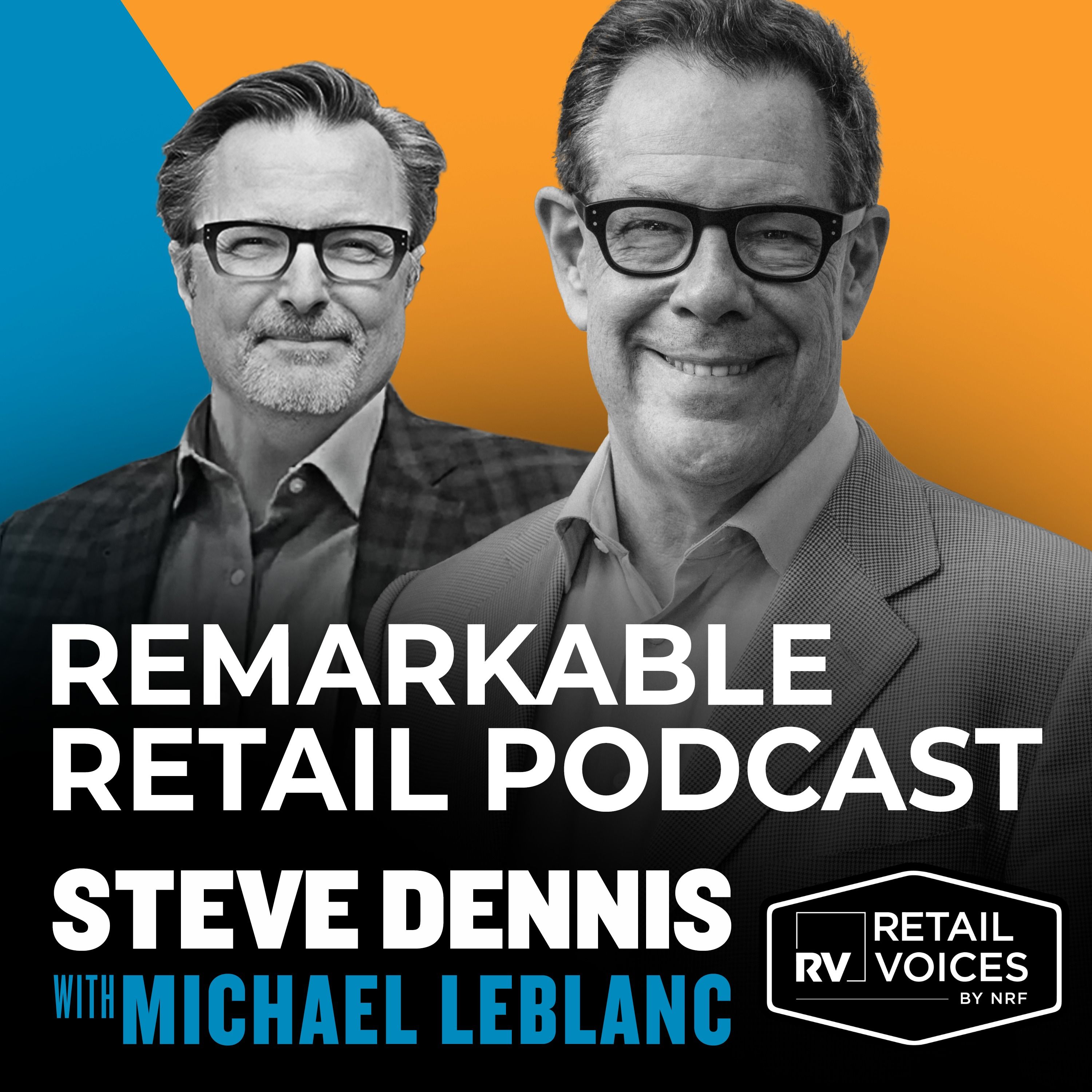
Remarkable Retail Podcast
Michael LeBlanc, Steve Dennis
Retail Unwrapped - from The Robin Report
The Robin Report
The Jason & Scot Show - E-Commerce And Retail News
Jason "Retailgeek" Goldberg, Publicis & Scot Wingo, ReFiBuy
OFFBounds Retail
Paula Macaggi
Tell Me Something Good About Retail
Bob Phibbs, The Retail Doc
Retail Transformation Show with Oliver Banks
Oliver Banks
The CPG Guys
Peter V.S. Bond & Sri Rajagopalan